Monday, 20 September 2010

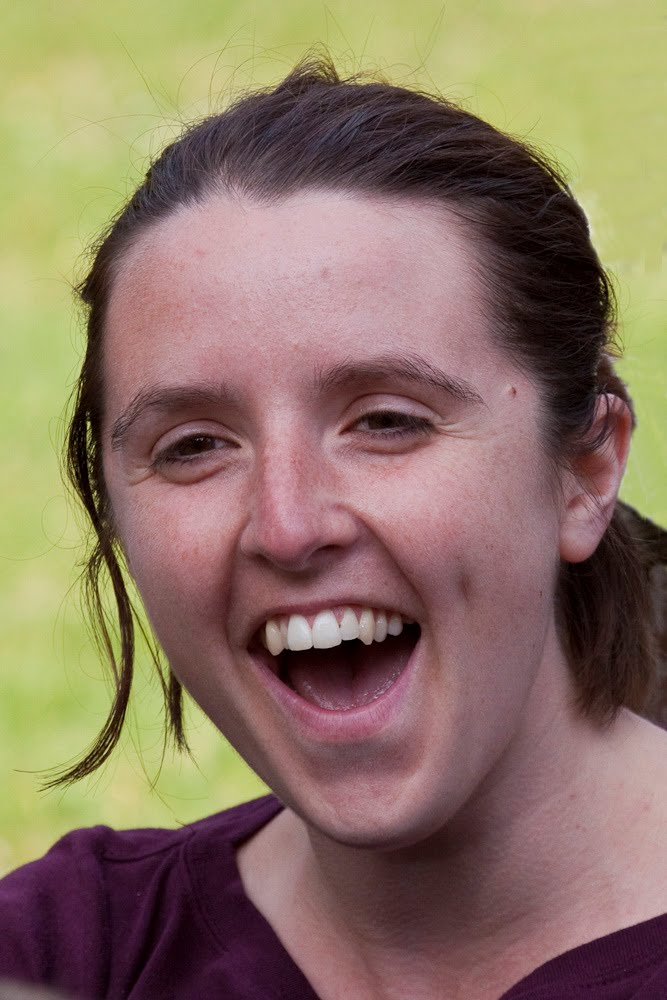
Informal portraits taken whilst on a holiday with friends during June.

Earlier this summer we enjoyed a large extended family holiday with two other families. I used the opportunity to practise photographing people. All are informal taken either with a 17-85mm lens or a 100-400 one. Taking account of my tutor's comments in my assignments I have also experimented with fill-in flash and I have indicated which images these are.


Fill-in flash was used on the above two shots.

This picture was taken using flash


Fill-in flash used


I used fill-in flash of this shot of Steve juggling in order to reduce the effects of contrasty sunlight.

Again I used fill-in flash for this photograph of my son and daughter.


I used fill-in flash in this shot of Linda and Steve and in the one below of their son David.


Some of the above shots were taken during the day in harsh sunlight. I found that, by using fill-in flash I could reduce the effects of the harsh contrasty light.

In many of the shots the subject is not looking directly at the camera - an effect I like.

Exhibition - Edward Weston: Life Work, Edinburgh, 19th August

Edward Weston is widely recognised as one of the masters of 20th century photography. This exhibition is the largest ever to visit the UK and it presents a survey of his career. I was delighted to find it on as part of the Edinburgh festival when we visited our son in August. It was divided into sections representing his different styles and includes some of his best known iconic images.


His most famous photographs of the 1920s are still lifes of sea shells such as the ones above of Nautilus shells. The lighting of these shells is superb and like some of the portrait photographers I have commented on earlier I love the contrasty black and white effect and the rich black backgrounds.


A lot of his work features vegetables and the image above Pepper No. 30, 1930 is perhaps the most famous pepper in the history of photography. Again the lighting is superb and the organic curves are reminiscent of the human form. It reminds me somewhat of a rear view of Rodin's sculpture The Thinker.
The Swiss Chard, 1927 is another example of his work on vegetables.

Weston went through two phases in his landscape photography, starting from the view that in order for an artist to make a proper landscape, he must choose the elements of nature that he wished to include. This early example of Shell and Rock Arrangement brings to mind a montage that might have been done today in Photoshop.

From the beginning of his career, Weston photographed nudes. In order to create photographs which have a timeless quality, Weston made sure not to show any birthmarks, scars and especially the face of his model. I find this of interest as during this course my emphasis seems to have been on showing the faces of subjects although I do like portraits when the subject is looking away from the camera and not always directly into the lens.

Wednesday, 31 March 2010

Assignment 4: A Sense of Place

For this assignment I decided on using Cleethorpes near where I live. Over the years I have got to know Cleethorpes well and spend a great deal of time there pursuing my interests of bird watching and wildlife photography.
I have included here the complete shortlist of images for this assignment. The first 7 are my final selection and the ones I have submitted to my tutor.


No seaside resort would be complete without its donkey rides. This was an image I thought I might not be able to capture so early in the year but I was fortunate that early March was sunny, if not particularly warm. I have deliberately placed the pier in the background to the picture to place it in Cleethorpes.


I have included this picture because it is a link to Cleethorpes emergence during the Victorian era. The building was originally built by the railway company and was the restroom for passengers using the station. It is now a fish and chip restaurant and takeaway and the ‘chef’ has recently won a ‘fish fryer of the year’ award. I like the way this picture links the past and the present and shows not only people enjoying their traditional seaside fish and chips but also people enjoying the sun on the promenade.


No set of photographs of a seaside resort would be complete without one of the pier and Cleethorpes is no different. I took this picture at sunrise early one Sunday morning just before it began to snow. The wonderful colours lasted for only a brief time before the snow clouds swept in from behind me.

The quieter south end of Cleethorpes is a popular venue for water sports such as kite surfing, buggying and windsurfing. I was pleased to get this picture on a clear day of strong winds and cropped the image so that the kite, surfer and kite lines form a diagonal line across the photo.


The east coast has problems with coastal erosion and deposition and it is no different at Cleethorpes where groynes have been built in an attempt to ease the problem. I like this old weathered and barnacled construction and was pleased to get the gull sitting on top of the buoy. I am also pleased with the reflection in the water and framed the image to include the lighthouse at Spurn Point in the distance. I also like the two tiny figures in the distance.


The south end of the beach is much quieter and I was out one evening on a stormy day hoping for a sunset with big skies and clouds. I liked the way the sun setting in the west lit up the storm clouds driving across the Humber estuary. I used the fence to lead the eye into the picture and towards the town on the distant horizon.


At the southern extreme of Cleethorpes the beach blends into Salt marsh which is preserved as an RSPB reserve. This is one of my favourite areas for wildlife photography. The Humber Estuary is well known for its wintering flocks of wild fowl and waders. On large spring tides thousands of birds are driven off the beach and mudflats and wheel in the air in huge flocks as they search for roosting areas to wait out the high tide before they can begin the all important task of feeding again. This is my favourite Cleethorpes a wild evocative area redolent with the cries of curlew, redshank and oystercatcher – a complete contrast to the busy seaside resort only a mile or two away.

The remaining photographs are those that were shortlisted but didn't make the final selection for a variety of reasons.


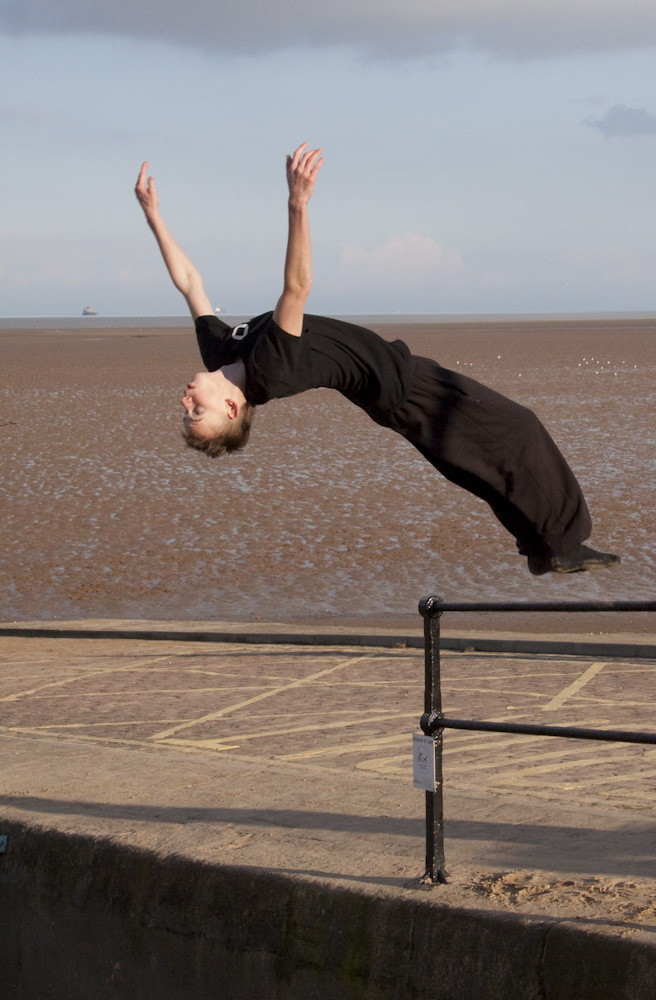
One day whilst out looking for pictures for the assignment, I came across two teenage boys performing amazing acrobatics. On engaging them in conversation I discovered that they were members of a local Parcours Team. They were only too pleased for me to photograph them. I cropped this picture so that the lad was moving into the frame. On the skyline can be seen one of the first world war forts. There were two and they had anti submarine nets slung between them.


One very popular feature of Cleethorpes is the light railway that runs along the seafront. Here it leaves the station in full steam with the two drivers fully concentrating.


Another photograph of the pier. I like the sky in this shot and the way that the sun has caught the pier. I would have liked there to be more light on the foreground however.


Another photograph taken at sunrise close to the pier with the wonderful presnow colours suffusing the whole image. If I hadn't used the one of the pier in the same light this one would have made it. I have placed the horizon on a third and the jetty on another third.


Grimsby Dock Tower, adjacent to North Cleethorpes foreshore is a famous landmark both from the sea and the land. I took this picture at sunset earlier this year. I would have liked to have been able to take it later in the year when the sun sets behind the tower. I am pleased with the reflections in the wet mud. Care needs to be taken here - I nearly lost my boots (and camera and tripod in the soft mud!). I shall return.


A typical Cleethorpes scene - visitors eating fish and chips out of the bag on the sea front. I was attracted by this man's colourful coat but was unable to get a shot more 'face on'.


I like the shot of this jetty but felt it too similar to the groyne shot that I put in the final selection. I think that the young boy looking out to sea at the ship completes the image.


The south beach at Cleethorpes is very popular for walking dogs as well as kiting. The dog walkers make a clourful foreground and Spurn Point can be seen in the background.


Another sunset shot of the south Cleethorpes beach. I love the storm clouds reflecting the light of the setting sun.


I was pleased with this shot of a kiter on a buggy rather than kite surfing. The picture was taken on a calm day . It would have been nice to see him straining against a strong wind.


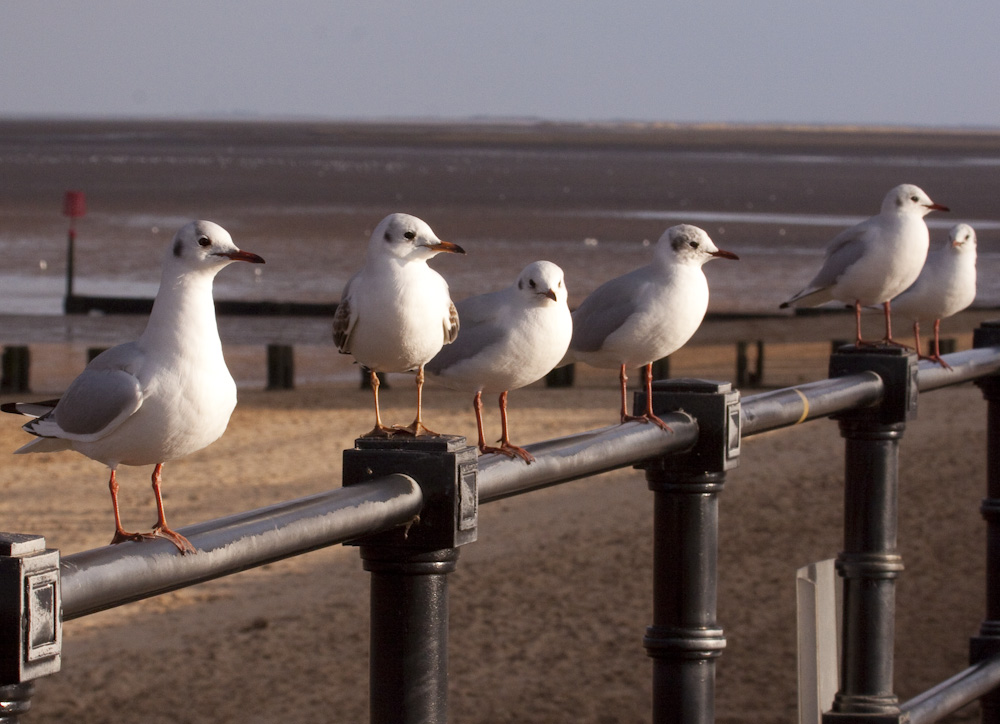
This was a shot I have been trying for for some time. I like the way the gulls line up along the railings on the sea front. It might have made the final selection had I not used another to depict the birdlife.


The final two shots are again of the thousands of waders wheeling in the sky at high spring tide.

Travel Photography

For Assignment 4 I decided to research some travel photographers. I began by looking at last year's winners of The Travel Photographer of the Year competition. http://www.tpoty.com/2009/winners/gallerytpoty2009.html#tpoty
I love the black and white portraits of the winner of the Young Travel Photographer of the Year, Courtney Krawec, in particular the first moody shot of the young girl. The detail in the face and the texture of the head shawl is amazing. In the People of the World Portfolio, Martin Edstom's mountain shot with the village huddled at the bottom of the peaks against the sea is stunning. I love the way the light catches the village. Lasse Damgaard's black and white portraits are also fabulous. Craig Churchill's polar bears also caught my attention. I agree with the judges' comment that these are more gritty images which makes a change from the cuddly toy shot which is very popular (not that I wouldn't mind the opportunity to get one of those too!!!) Daisy Gilardini's white on white shots are also eycatching and unlike the gritty polar bears the penguin parents and chick by Sue Flood are eycatchingly cute. I really like the framing of her shot of a penguin through an archway of ice. The colour of the ice is stunning and the shot shows that the subject doesn't have to be large in the frame to be a winner. Louis Montrose's back and white landscapes are amazing; they are reminiscent of Ansel Adams. I particularly like the second one with the complicated interlinked rock patterns. Cropping in close has made the picture for me. I agree with the judges comment on the portfolio of Poras Chaudhary from India where they comment on the way that he has captured the vibrant life and vivd colours of the country. My attention was caught by Ron Tear's unusual shots of the Millenium Bridge in London and I have a similar shot of the empty Turbine Hall at Tate Modern although in colour! The lighting on Craig Easton's Homeland shot is tremendous. I wonder how long he waited for that! Finally I love the slow shutter speed effect of Tareq Alhamrani's image of a big wheel.

I first came across Paul Harris through his work in Outdoor Photography Magazine.
http://www.paulharrisphotography.com/index.php?option=com_content&view=frontpage&Itemid=1
Since becoming a freelance photographer in 1990, Paul has travelled and photographed extensively around the world. His most recent expedition assignments took him by camel through the Western Sahara and a journey across the Central Asian Republic of Kyrgyzstan. Conservation and the environment have long been close to his heart and three assignments in 2006/7 took him to Fiji and The Philippines for Coral Cay Conservation, South Africa and Kenya for I to I, Tanzania and Peru for Earthwatch.
I like all of his work but particularly enjoyed his images of Ladakh. I love mountains and had a great time trekking in the Atlas Mountains of Morocco but Ladakh is so much more exotic.

I have also consulted National Geographic magazine and looked at the work of some of the photographers featured in their pages.

I have looked at and enjoyed the work of :
Peter Essick http://www.rayoflightphotographs.com/
Tyrone Turner http://www.tyronefoto.com/index.html
Michael Yamashita http://www.michaelyamashita.com/
Matt Moyer http://www.mattmoyer.com/
Mel White http://www.melwhitephoto.com/home.html
Flip Nicklin http://photography.nationalgeographic.com/photography/photographers/photographer-flip-nicklin/

Wednesday, 13 January 2010

Alternative Images for Assignment 3

As I spent such a great deal of time agonising over the editing of the images for this assignment I decided to include some of my alternatives on my blog.

Lincoln Cathedral


I love this photograph of the screen and organ and found it a very difficult decision to reject it for the assignment. I like the warm light on the screen and have included the chairs to demonstrate that the building is used for services and concerts. The organ shows that it is a place for music. I like the way that the warm colours in the foreground contrast with the cooler ones behind. I also find it interesting that the scaffolding upper right shows that constant maintenance is required.


This is a shot of the cloister showing the beautifully carved roof. In the days of the cathedral being run by monks this was a covered area for exercise and quiet contemplation.


A picture showing some of the beautiful archtecture in the upper tier of the nave. Again when the building was being designed and built it would have been a way of praising God.


Beautiful fan vaulting in the Chapter House. The local limestone glows in the warm lighting.


Another example of the wonderful soaring architecture, this time with the superb reflectived light from the stained glass.


I took this shot underneath the central tower to show the wonderful roof. It is interesting to note that there is a circular trapdoor towards the top left. Beyond this is a pulley which would have been/is used to haul things up to the roof. I really like the colours in this shot.


This is a close up of some of the carving on the screen. Interestingly, at the bottom of the carving is a 'Green Man' with the carved foliage pouring out of his mouth. At one time this carving was richly painted and there are odd remnants of that paint.


Beautiful Stained glass in the Bishop's Eye window.


A snail's eye view of the soaring central tower on a wonderful summer's day.


A shot of the West Front peeping over an ancient gateway.


More rich reflected colours from the stained glass.


Another shot of the green man.


I took this picture of the huge west towers whilst on a roof tour.


The central tower from the roof.


The Ropewalk, Barton upon Humber, North Lincs.


I took this shot to show the narrow end of the old rope factory, now an arts centre. The building is a quarter of a mile long as it was designed and built for the manufacture of rope. Unfortunately the cars obscure the view down the length of the building.

Riad Moucharabieh, Marrakesh


The Riad or hotel/guesthouse in the medina in old Marrakesh is a cool haven of plants, tiles and running water. It is like stepping into the Arabian Nights. Here I have shown one of the screens dividing the ground floor into reception rooms, lounge and dining room. Beyond are old Moroccan cooking implements.


A beautiful lantern.


At night the Riad is lit with low electric lights and typical Moroccan candle lanterns which provide an exotic ambiance.


The Menestralia Glass Factory, Mallorca


There is a long history of glass-making in Mallorca and the Menestralia Glass works although looking rather like a castle was built expressly for that purpose with a workshop vented to allow the escape of heat and fumes and also a showroom.


I loved this wonderfully rich display of coloured glass in a window of the workshop.


Here I have shown one of the master glassblowers working on a red hot piece of molten glass. His assistant is busy next to him. I needed to use a slow shutter speed owing to the poor lighting but I like the fact that the motion blur hints that the operation has to be done relatively speedily before the glass cools.

Below are some colourful shots of the showroom.


The Floral Halls, People's Park, Grimsby

A shot of the outside of the greenhouse showing the construction of the building and the way it is set in attractive gardens.
Below are two internal shots of the cool house.